Wednesday, December 12, 2012

The COCONUT


Coconuts have a bad reputation. That’s because the meat of this fruit is largely composed of saturated fat. But while that may sound unhealthy, the hard science tells a different story.


1. Coconut oil is an excellent skin moisturiser and that it kills germs.


2. The primary saturated fat in coconut meat, cream, and oil is lauric acid,
    which lowers markers of heart-disease risk by improving your ratio of
    total cholesterol to good HDL cholesterol.


3. Like olive oil and butter, coconut oil is ideal for cooking because heat doesn’t
    cause its fats to oxidize—a reaction that can create unhealthy free radicals.
    Look for virgin or extra-virgin coconut oil, like Spectrum Organic.


4. Most of the saturated fats in coconut are “medium-chain” fatty acids. These
    fats are preferentially burned for energy, instead of stored as belly fat.


5. Coconut oil has antimicrobial properties, which may help fight off infections
    and pathogens.


6. Fresh coconut water, which is found in young, green coconuts, contains
    potassium, sodium, and glucose, and is also very palatable. In fact, it’s an
    ideal beverage for rehydrating after exercise. For a ready-to-drink product,
    check out O.N.E. 100% coconut water.

Tuesday, December 11, 2012

The 007 James Bond Yoga Workout

Numb pain

Easy pose (sukahsana)

How - Sit crossed-legged with feet under opposite thighs and count 12 breaths over 60 secs. Try not to ‘attach’ to anything going on around you.

Why - Directed meditation was more effective than morphine, massively boosting your pain tolerance.


Enhance your concentration

The eagle (garudasana)

How - Twist your right leg around your left and your forearms round each other. Squat for 30 secs on each leg.

Why - Balancing requires concentration. It boosts activity in your prefrontal cortex, the brain area used for paying attention.


Build immediate arm strength

The crocodile (chaturanga dandasana)

How - Lie face down. Tuck your toes under and place your hands under your shoulders. Push up until your arms are bent at 90 degrees. Hold for 60 secs.

Why - This move works your triceps constantly, whereas press-ups allow rest at the top. Power up with your arms, and thrust with your feet to ‘jump’ forward.


Sculpt perfect abs

The boat (paripurna navasana)

How - From sitting, bend your knees and lift your feet. Extend your arms, focusing on lifting your collar bones and chest. Hold for 60 secs.

Why - This move requires holding a strong position for a whole minute. Because you’re balancing too, your muscles have to work harder as stabilisers. Straighten your legs while holding the Boat. This works two huge muscle groups crossing into your lower abs as well.


Halt hair loss

Inverted pose (vipareeta karani)

How - Lie on your back, raise your legs until your entire trunk is at 45 degrees. Support your body with both hands. Hold for 1 min.

Why - The blood circulation to your hair follicles is significantly increased in this position, which will help to prevent hair loss. This posture also increases your spine’s elasticity and improves lung capacity.


Saturday, December 8, 2012

The Natural Beauty of Santorini

Santorini, many people dream about this romantic island. Santorini is famous for its small domed churches & the spectacular views. The sunsets in Santorini are said to be the most breathtaking one on the planet. Beside its fantastic white beach, active volcano & neighboring islands, its natural beauty has attracted many visitors from around the world.


Santorini is a volcanic island in the Cyclades group of the Greek islands. It is located between Ios and Anafi islands. It is famous for dramatic views, stunning sunsets from Oia town, the strange white aubergine (eggplant), the town of Thira and naturally its very own active volcano. There are naturally fantastic beaches such as the beach of Perissa, maybe the best beach in Santorini, the black pebble beach of Kamari, white beach and red beach.

Let take a look of the pictures of The Beauty of Santorini ... Hopefully one day I'll have a chance to visit there.


                                  Beautiful .....


Friday, December 7, 2012

Want six-pack?


Wanna get six-pack in just 4 weeks? Try these diet and workout plan...

Diet

Use these 10 simple nutritional tenets to supercharge your core musculature. Employ these dietary changes and you’ll spark up your metabolic rate and get your mid-section functioning correctly.

1. Avoid refined and processed foods wherever possible.
2. Try to eat six times a day – around every three hours.
3. With every meal, use a portion of protein as your base. Think eggs, fish, chicken, and other lean meats.
4. Between meals snack on nuts, seeds, avocado, olives, or small bags of snap peas.
5. For breakfast and your second meal, make sure you get some starchy carbs – oatmeal, rye, or sprouted bread – and a piece of fruit.
6. For lunch, sweet or regular potato, brown rice and quinoa are all excellent options.
7. For your evening meal, try to get some veg – but avoid root veg and any starchy carbs.
8. Drink lots of water.
9. Every 10 days give yourself one cheat meal. It can be anything you want. This might seem strict, but if you’re trying to reveal your abs in just four weeks such gastronomic sacrifices are necessary.
10. Consume a post-workout shake as soon as possible after your workout. Aim for around 40-50g carbs and 20-30g protein. “This stabilises your hormonal system to enable tissue regeneration and keeps blood sugar stable,” explains Learney.


The workout

Complete three circuits of the six exercises below four times a week (suggests Monday, Tuesday, Thursday, and Friday or Saturday) for four weeks. On two of your non-workout days, complete 45 minutes of uphill treadmill walking (not running). Rest on Sunday.

Your total workout each day should last 45 minutes. Fill in any spare time you may have after completing the circuits with some uphill treadmill walking to complete a 45-minute slot. Keep your rest periods tight and focus on technique rather than speed.

1. Overhead bench squats

 
Why? This exercise has a high metabolic output as multiple joints are used. It fires the midsection through stabilising the weight above the head while simultaneously lengthening the midsection.
How? With a suitably weighted bar held above your head, position yourself in front of a bench. Keeping the bar in line with the midline of the body sit back onto the bench, keeping your chest high and head up. The bar will want to move forward – as you sit back onto the bench try to move it further back. Stand and repeat.

Sets 3-4
Reps 20-30
Rest 30 seconds

Crank it up for weeks three and four Increase sets to 5-6, decrease rest to 0-15 seconds and make the bench an inch lower.

2. Prone knee to outside same elbow

 
How? In a push-up position, lift your right knee up towards your right elbow – trying to land it on the top of the elbow. Keep your hips down and foot off the floor throughout. Repeat with your other leg. That’s one rep.

Sets 3-4
Reps 10-15
Rest 30 seconds

Crank it up for weeks three and four Increase sets to 5-6, decrease rest to 0-15 seconds and perform an additional push-up every fifth rep.

3. Push-ups

 
Why? These continue the static work on your midsection while working the pecs, deltoids and triceps, too.
How? Do as many standard push-ups as you can. If you’re seriously flagging, drop your knees to squeeze out some box push-ups for a set of 15.

Sets 3-4
Reps 15
Rest 30 seconds

Crank it up for weeks three and four More full push-ups. Less box push-ups.

4. Swiss ball hamstring curls

 
Why? These fire the posterior chain and make the hamstrings and glutes work hard.
How? Lie on your back with a Swiss ball positioned underneath the heels of your straight legs. Keep your hips up off the floor, stabilise with your glutes and curl your heels to your bum. Return and repeat.

Sets 3-4
Reps 10-15
Rest 30 seconds

Crank it up for weeks three and four Increase sets to 5-6, decrease rest to 0-15 seconds and return the ball to its starting position using only one leg.

5. Split lunge/Overhead press

 
Why? Again, your midsection is fired through stabilising the weight above your head and the use of multiple joints means a high metabolic output.
How? Hold a dumb-bell on each shoulder and set up a lunge position. Move your back knee to the floor in a forward lunge and as you reach the end of the movement press both dumb-bells above your head.

Sets 3-4
Reps 10-15 seconds
Rest 30 seconds

Crank it up for weeks three and four Press the dumb-bells above your head before you begin the exercise. Then perform the lunge, keeping the weights above your head for the whole movement.

Uphill treadmill walking

Once you’ve completed three circuits of the previous six exercises, get on the treadmill until your total session time hits 45 minutes.


Why? To burn additional fuel once your glycogen levels are depleted. Stopping at the 45-minute mark ensures you preserve the use of muscle tissue as fuel.
How? Set an incline for as hard a setting as you can manage and start walking. Do not run. This workout has a lot of muscular stress around the lower limbs and the impact of running when these are fatigued is not good.

Crank it up for weeks three and four Walk faster on an even steeper incline. Do it even if you only have a few minutes left in your designated 45.


Wednesday, December 5, 2012

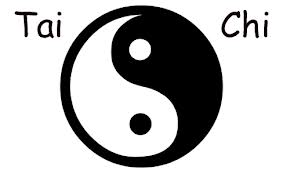
The benefits of Tai Chi

Suffering from arthritis, depression, back problems, obesity? Or recovering from an injury or simply stiff from ageing and haven’t touched your toes in ages? Tai chi, an ancient martial art, reputedly created by a Taoist monk, could be the answer!

 
Claims Tai chi is a slow and deliberate set of flowing movements that provide moderate aerobic and low-impact exercise. It’s great for those who dislike traditional exercise. The benefits include sleeping better, having a healthier immune and circulatory system, stress control, increased mobility and gentle toning of your muscles and joints.

The Good -  It’s an excellent gentle exercise and works out your body and soul. Many breast-cancer survivors find it a great way to boost their lymphatic system. Bad back? It’s fantastic for mobilising and strengthening the spine.

The Bad -  For the first four months you’ll be focused on learning the sequence of 108 movements, so it’s a long-term health investment rather than an instant fix.

Essentials Wear flat-soled shoes and loose, comfortable clothing such as track pants.


                                                        Tai Chi is for all ages ......


Tuesday, December 4, 2012

Nightmare !


Sometimes nightmares take hold and disturb our dreams, making us agitated, anxious and they stop us from getting our vital beauty sleep. Where do they come from? Do they have a particular meaning?


Where do nightmares come from?
Like dreams, nightmares are a mental and physical reaction. They appear during the REM phase of sleep. The word nightmare comes from night, and mare which means ghost in Dutch. It translates as anxiety and fear, a distortion of a situation or of an event that took place during the day (in the majority of cases.) It can also be related to old memories from months or years ago. A person who has a nightmare wakes up often feeling uneasy, with a beating heart, sweating, frightened and even disorientated. Some people also have post traumatic nightmares following an accident, war, suicide of a loved one, etc. In this case, they are a lot more recurrent. Sometimes nightmares can also be caused by illness, chronic pain or even bad digestion. In all cases, they tell us about our unconscious. Each person reacts in a different way. Some nightmares can be troublesome, while some people just find them unpleasant.

Why do children have more nightmares than adults?
It’s proven that children have more nightmares than adults. The reason is simple. A new baby is constantly exposed to new images, sensations, smells, sounds and, as a result, strong emotions. It’s only during sleep that the infant eliminates all the information the brain accumulates during the day. Often babies' main nightmares are of abandonment by the mother, as when the mother leaves her child at nursery in the morning, for example. Up until 5 years of age, the child often has nightmares about ghosts, dragons and being chased by robbers as seen on TV or in books. Some children also dream about conflicts with their bothers and sisters or with their parents. The reason for this is that they do not yet have the words to describe their fear and have difficulty expressing their feelings. But as time passes their language develops and children can explain their emotions and feelings as well as reason with themselves - and they have less and less nightmares.

Can you prevent nightmares?
When a nightmare becomes recurrent it can be very disturbing, not only at night but also during the day, so it's vital to deal with nightmares rather than ignore them, so they become less threatening. Some psychologists say that treating nightmares enables overcoming fears and makes spiritual development easier.
The best known method consists of writing or visualising the nightmare before sleep, and inventing a different scenario. Repeating this new scenario for several nights in a row in the mind, the nightmare will change little by little and take on a more positive end. Another possiblity is if and when you have the opportunity to have a ‘lucid’ nightmare, which means that you know what you dreamed of when you wake up, you can change your actions, question yourself about the reason for the scenario, and change it.

Interpretation of the most common nightmares
- Death, illness and accidents. At first glance these can seem like premonitions. Whether someone tells you that they have an incurable illness, you hear about the death of someone in your family, or you witness a terrible accident on the motorway, these nightmares simply reflect the fact that you are worried about one or several people who are having problems or taking risks at the time. So your unconscious imagines the worst - which will not neccessarily happen, rest assured! Dreams about saying good bye to a dead person are also very painful, even if anxiety is replaced with relief when you wake up. And if you dream about your own death, it could mean that there has been a change in your life or that you’ve come to an end of a difficult period.

- Being chased. Do you dream about being chased by an individual or a ferocious animal and not being able to escape? This can mean that you are looking to flee someone or something that requires you to acknowledge them/it. To overcome this you must find what you are fleeing from and find a solution to any problems in your life.

- A house falling down. This can mean a lack of stability and difficulty in keeping on top of things. This is a frequent nightmare in depressed people.

- Monsters (and other imaginary characters.) The majority of these are found in children’s nightmares. They can mean a subtle and uncontrolled danger (violence and sometimes sex); a fear of the unknown or even chaos that can affect everyone.

- Vomit. Some people have painful dreams where they ‘empty’ themselves. This can transalte as a true feeling of being fed up in one area in particular in life, a difficulty facing a recurring and traumatic situation that is literally devouring vital energy and affecting health.

Sunday, December 2, 2012

Coconut Oil for your teeth

Coconut has always been treated with respect in traditional Ayurvedic healing since centuries in India. Coconut oil is used for skin care, hair care, stress relief, maintaining cholesterol levels, increase immunity, aid digestion, control diabetes and blood pressure etc. The antioxidant, antimicrobial, antifungal and antibacterial properties of the oil is no surprise.


Now recent research on the antibacterial properties of coconut oil treated with digestion aiding enzymes conducted by the Athlone Institute of Technology in Ireland have revealed another dimension.

The enzyme modified oil reduced the growth of most strains of tooth decay causing Streptococcus bacteria found in the mouth. The antimicrobial properties could greatly benefit the oral health care market. This could prove to be a valuable alternative to chemical additives that are currently in use in dental care products. With increasing tooth related problems amongst children and teenagers, this natural healing alternative could prove to be invaluable to the oral hygiene industry.

Try to use coconut oil to brush your teeth.


from : BBc.co.uk